Prosthodontist or General Dentist for Implants?
A prosthodontist is a dental specialist in replacing and rebuilding teeth, with three years of training beyond dental school. What that difference actually means for a patient in New York, and when it matters.
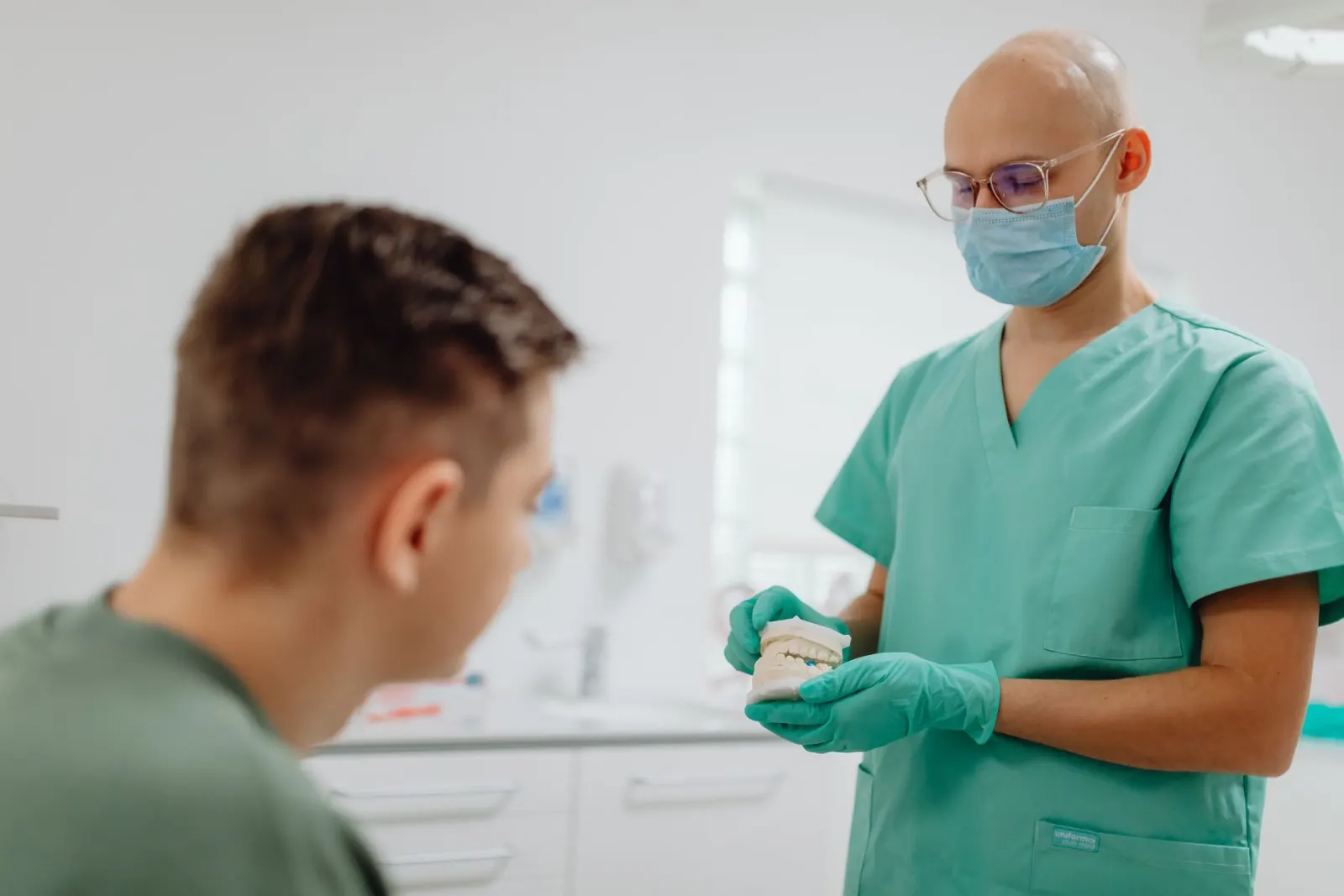
Almost every dental practice in Manhattan advertises implants and cosmetic work. Very few of them are specialist practices, and the distinction is not marketing.
What a prosthodontist is
Prosthodontics is one of the dental specialties recognised by the American Dental Association. It is the specialty concerned with replacing and reconstructing teeth, and it requires three years of hospital-based training after dental school, on top of the four years of dental school itself.
Board certification is a further step, and most prosthodontists do not take it. The American Board of Prosthodontics examines candidates in four parts. Someone who has completed it is a Diplomate of the Board.
Where the difference actually shows
For a single filling, or a routine cleaning, it shows very little. Good general dentists do that work well every day, and a specialist practice is not a better place to have a cavity filled.
It shows in three situations.
When the case is large. Replacing one tooth is a contained problem. Replacing a full arch is a design problem: where the implants go, how the bridge is shaped, how it supports the lip, how it will be cleaned in five years, how it can be repaired without replacing all of it. Those decisions are made before any surgery, and they determine whether the result lasts.
When the bite has changed. Teeth that have worn down over decades change the way the jaws close. Restoring individual teeth into a collapsed bite produces work that keeps breaking, because the underlying problem was never addressed.
When something has already failed. Reconstruction after unsuccessful treatment is routine in a prosthodontic practice. The first job is not to redo the work. It is to find out why it failed, because repeating it more carefully rarely produces a different result.
The question worth asking
Not “are you a specialist”, but “how will this be planned?”
The answer you want is that the finished result gets designed first, and the treatment works backwards from it. The answer you do not want is that the implants go where the bone is easiest and the teeth are designed around them afterwards. That is the approach that produces restorations which cannot be cleaned, cannot be repaired, and do not look like they belong to the person wearing them.
What this practice is
Dr. Kunal Lal is a Diplomate of the American Board of Prosthodontics, certified in 2006. He earned his master’s in prosthodontics and his DDS at Columbia University College of Dental Medicine, taught there from 2002 to 2010, and directed its graduate prosthodontics programme from 2005 to 2008.
If you are weighing up a large piece of treatment and want a second view on how it should be planned, that is a reasonable thing to book a consultation for. It does not commit you to anything.
Frequently asked questions
Is a prosthodontist better than a general dentist? +
Not better, different. General dentists handle the full range of everyday care and many place implants competently. A prosthodontist has three additional years of training specifically in replacing and rebuilding teeth, which matters most when a case is complex: a full arch, a collapsed bite, or work that has already failed once.
How do I know if a dentist is actually a prosthodontist? +
Prosthodontics is one of the dental specialties recognised by the American Dental Association, so it is verifiable rather than a matter of self-description. Ask whether they completed an accredited postgraduate prosthodontics programme, and whether they are a Diplomate of the American Board of Prosthodontics, which is a further examined step beyond the specialty itself.
Do I need a referral to see a prosthodontist? +
No. Many patients are referred by their general dentist, but you can make an appointment directly.
Will treatment cost more with a specialist? +
Sometimes, and it depends on the case rather than the title. What a specialist practice should give you either way is a written plan with the sequence, the stages and the costs set out before treatment begins.
Related treatments
Have questions about your smile?
Our team in New York is happy to help. New patients are always welcome.