
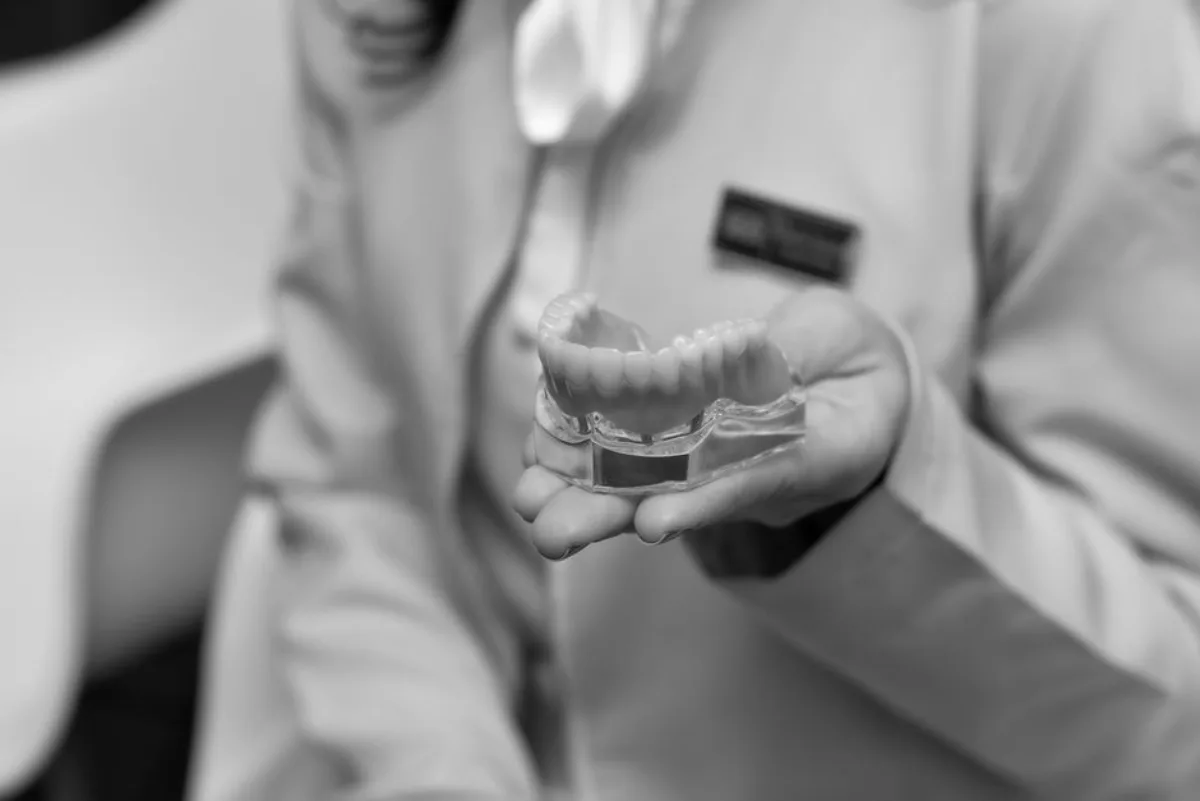
A fixed bridge anchored to dental implants replaces several missing teeth in a row, with stability a removable partial denture cannot offer.
Book an appointmentWhen several teeth are missing in a row, particularly toward the back of the mouth, a bridge anchored to implants is often the only fixed alternative available.
Back teeth do most of the work of chewing, and they are where a removable denture struggles most: it has the least to hold on to and the most force to resist. Implants change that completely. The bridge is anchored into the jaw, so it does not lift, rock or need adjusting mid-meal.
What you get back
- Strength and stability that lets you eat normally rather than selectively
- Preservation of the jawbone in the area the teeth were lost from
- Facial support, since bone loss in the back of the jaw shows in the face over time
- Nothing to remove, and nothing clipped onto your remaining teeth
The trade-off, stated honestly
An implant bridge costs more than a partial denture and takes longer to complete. What it buys is a restoration that is fixed, that does not load your remaining natural teeth, and that maintains the bone rather than sitting on top of it while it disappears.
Ready to get started?
A fixed bridge anchored to dental implants replaces several missing teeth in a row, with stability a removable partial denture cannot offer.
Frequently Asked Questions
Common questions about multiple-tooth implant bridges at LAL Dental.