Dental Implant or Bridge: How to Decide
Replacing one missing tooth comes down to the condition of the teeth on either side. The honest comparison of implants and bridges, including what each one costs you beyond money.
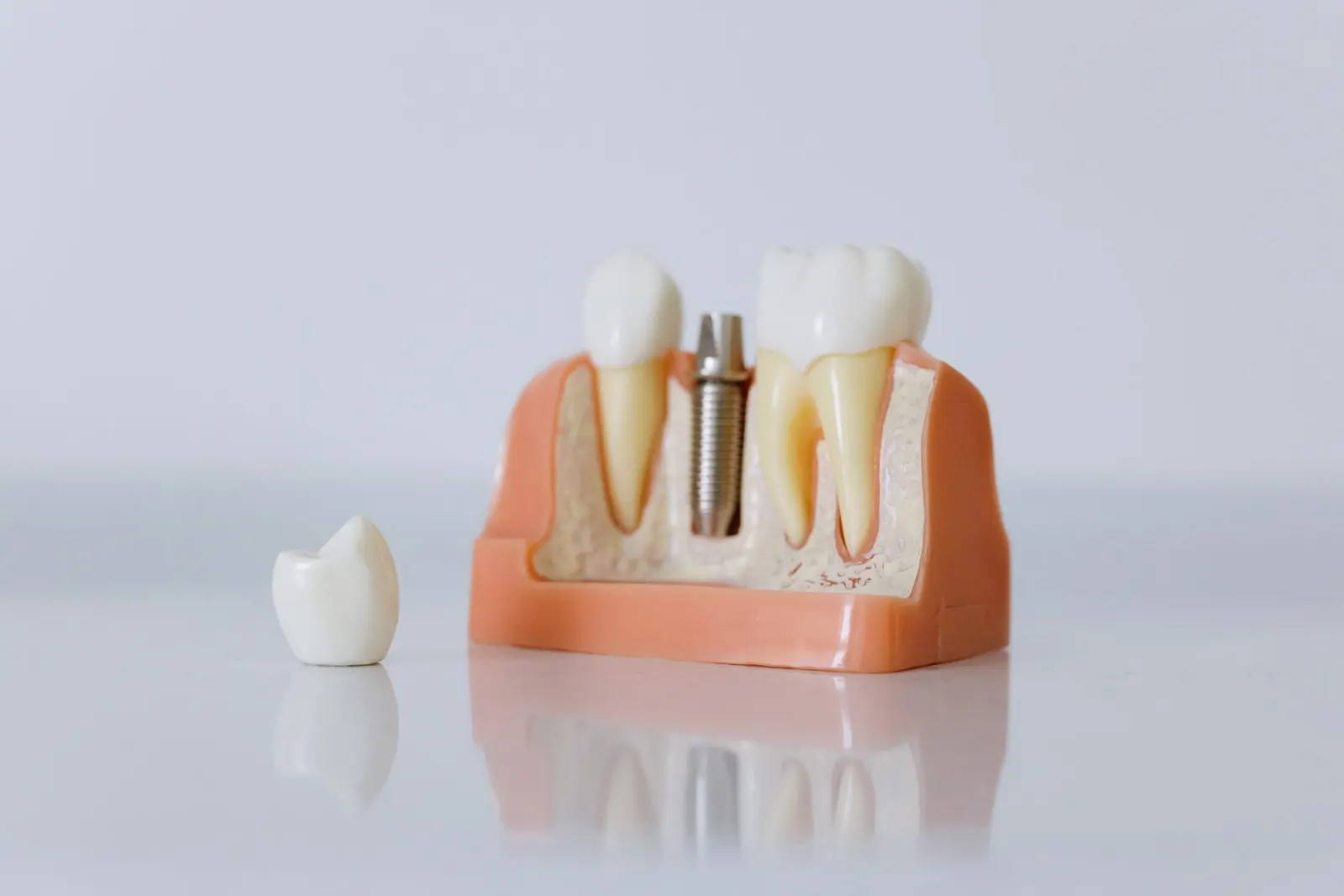
One tooth is missing. Two reasonable options. The choice is made less often on the merits of implants versus bridges than on the condition of the two teeth either side of the gap.
What each one actually is
A bridge replaces the crown of the missing tooth and borrows support from its neighbours. Those teeth are prepared, which means cutting them down, and the bridge is cemented across all three.
An implant replaces the root as well. A titanium post is placed into the jaw in the position the natural root occupied, bone grows onto its surface and holds it, and a custom ceramic crown is attached.
The question that decides it
Are the teeth either side already restored?
If they carry crowns or large fillings, a bridge uses them for something. Nothing healthy is sacrificed, treatment is faster, and it costs less.
If they are intact, a bridge means permanently cutting down two healthy teeth to replace one missing one. That is a real cost and it is worth stating plainly, because it is not reversible.
The bone argument
A natural root stimulates the bone around it every time you bite. When the root is gone, that stimulus stops, and the bone slowly resorbs. Over years this shows in the shape of the jaw and eventually in the face.
A bridge does nothing about this: it sits above the gap. An implant restores the stimulus, which is the strongest structural argument for it.
Where implants are not the answer
Where there is not enough bone to hold one, and grafting is not appropriate. Where the patient has active gum disease that has not been brought under control. Where the number of appointments over several months is genuinely not workable.
A good plan says so rather than treating the implant as the automatic premium option.
Leaving the gap
This is also a decision, and it is treated as one. What happens is predictable: bone resorbs where the root was, and the teeth either side drift or tip into the space. Both make later treatment harder and more expensive.
If you are weighing this up, the useful thing is an examination that tells you the condition of the neighbouring teeth and the bone. That is what the choice actually turns on.
Frequently asked questions
Is an implant always better than a bridge? +
No. If the teeth on either side of the gap already carry crowns or large fillings, a bridge makes good use of them and nothing extra is lost. If those teeth are healthy and untouched, there is a real argument against cutting them down, and an implant becomes the better option.
How many appointments does a single implant take? +
Normally about four visits. Most patients are able to work the day after the implant is placed.
What happens if I leave the gap? +
The bone that held the root begins to resorb, and the teeth on either side tend to drift or tip into the space over time. Neither is quickly reversible, which is why the decision is worth making sooner rather than later.
Do implants last longer than bridges? +
An implant replaces the root as well as the crown, so it does not depend on neighbouring teeth and it maintains the bone. Bridges commonly last many years but usually fail at a supporting tooth, which is why the condition of those teeth matters so much when the decision is made.
Related treatments
Have questions about your smile?
Our team in New York is happy to help. New patients are always welcome.