Computer-Guided Implant Surgery, Explained
Implant positions planned in software against the finished teeth, then placed through a custom surgical guide. What guided surgery changes for a patient, and what immediate loading really means.
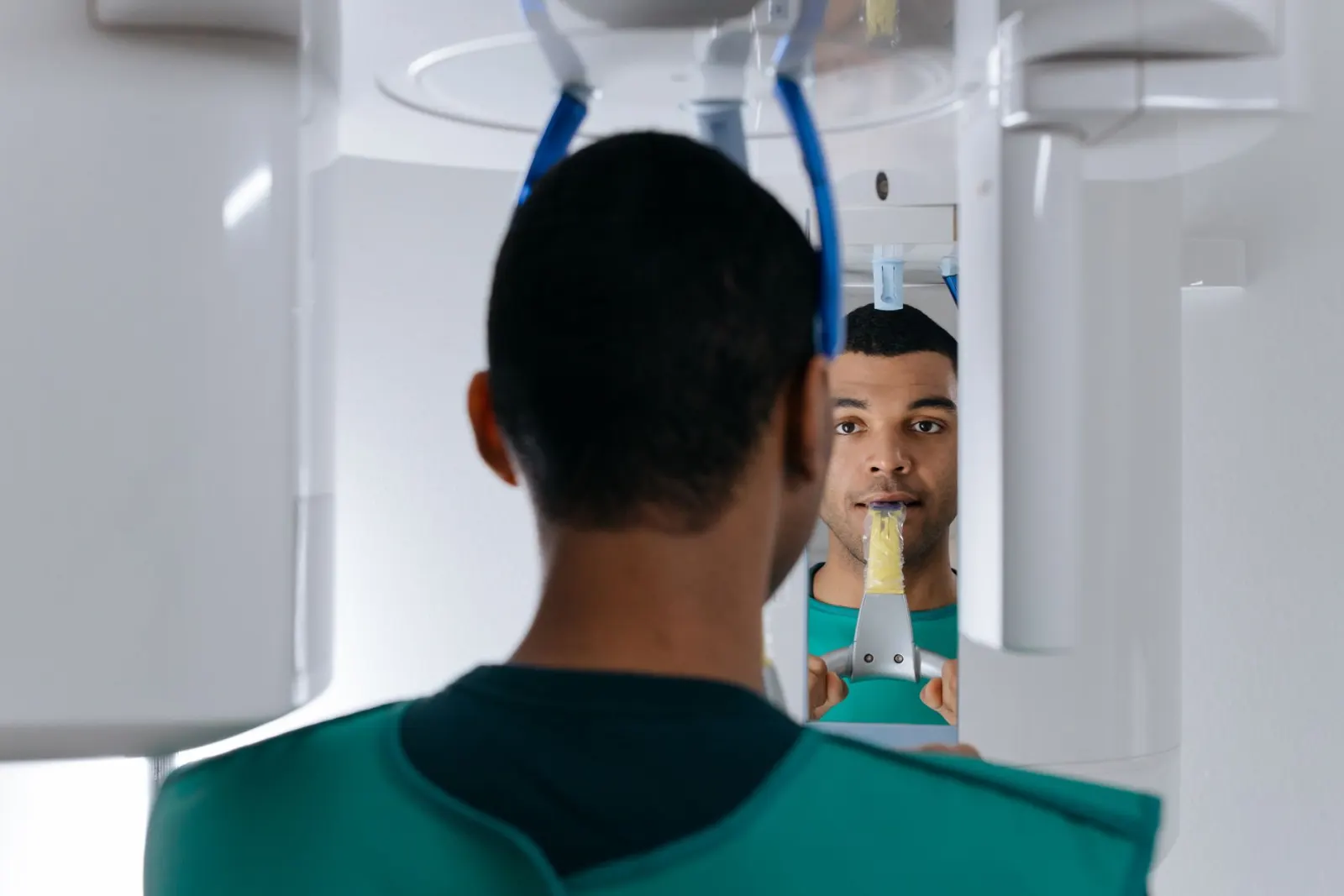
The visible part of implant treatment is the surgery. The part that determines whether it succeeds happens before it.
Planning from the end backwards
Guided surgery starts with the finished teeth. They are designed first: where they sit, how they meet the opposing jaw, how much tooth shows when you smile, how the whole thing will be cleaned.
Only then are the implants positioned, in software, to support that result. They have to sit in bone that can carry them, at angles that let the restoration be maintained and repaired, and clear of the nerves and sinuses.
A custom surgical guide is then manufactured, which transfers that plan into the mouth.
Why it matters more than it sounds
An implant placed where the bone happened to be easiest is a problem that surfaces years later. It shows up as a restoration that traps plaque, a screw access hole in the front of a tooth, or a bridge that cannot be repaired without remaking all of it.
Planning against the final restoration avoids that whole class of problem rather than managing it afterwards.
What changes for the patient
- Frequently a smaller surgical procedure, sometimes with no incision at all
- Less swelling and a more straightforward recovery
- Fewer appointments in most cases
- In suitable cases, fixed provisional teeth on the day of surgery
Immediate loading, honestly
Immediate loading means leaving surgery with teeth. It is the part patients care about most, and it is also the part most oversold.
It depends on how firmly the implants sit when they are placed, which is a judgement made during the procedure and cannot be promised in advance. Where the bone is soft or the implants do not achieve enough initial stability, loading them early risks the whole result. A plan that commits to it regardless is not a plan.
Who is doing the planning
This is Dr. Lal’s published area. He has authored work on computer-generated surgical templates for prosthodontic and surgical implant planning, and lectures nationally on guided placement combined with immediate loading protocols, including at the Greater New York Dental Meeting and the Dentsply Sirona Lab Summit.
Frequently asked questions
What does guided implant surgery mean? +
Your jaw is scanned in three dimensions and the implants are positioned in software, planned against the teeth you will end up with. A custom surgical guide is then made that reproduces that plan in the mouth, so the placement is executed rather than judged during surgery.
What is flapless implant surgery? +
Conventional placement involves lifting the gum to see the bone directly. When the plan is accurate enough to be relied on, the implant can be placed through a small opening in the gum instead. Less surgical trauma generally means less swelling and a more comfortable recovery.
What is immediate loading? +
Fitting provisional teeth to the implants at the time of surgery rather than waiting months. It is not appropriate for every case and depends on how firmly the implants sit at placement, but when it is appropriate it means you are not without teeth during treatment.
Is guided surgery available everywhere? +
The technology is widely sold. The planning judgement is what varies between practices, because the software does not decide where the finished teeth should be.
Have questions about your smile?
Our team in New York is happy to help. New patients are always welcome.